Why Salt Is Dangerous for Parrots
Why “Polly Wants a Cracker” Got It Wrong
“Polly wants a cracker” is one of the most well-known phrases associated with parrots. It sounds harmless, even sweet. Unfortunately, it also reflects one of the most damaging misunderstandings about parrot care.
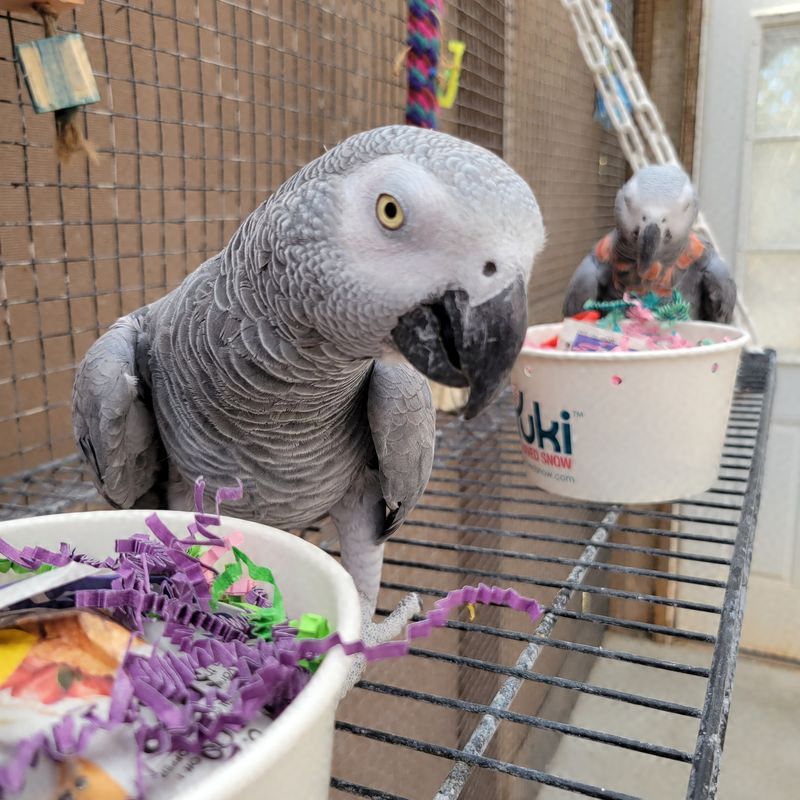
Crackers, chips, bread, and other salty human foods are extremely harmful to parrots. Over time, diets that include salt can lead to serious health problems, including kidney disease, heart disease, neurological issues, and early death. Many parrots in captivity have suffered and died not because they were unloved, but because people did not realize how dangerous these foods truly are.
Parrots Are Not Built to Process Salt
Parrots evolved eating fruits, seeds, nuts, flowers, bark, and vegetation found in the wild. These foods are naturally low in sodium. Their bodies are not designed to process added salt the way human bodies can.
Even small amounts of salt can overwhelm a parrot’s system. What feels like a tiny snack to us can be equivalent to a toxic dose to them. Salt causes dehydration, strains the kidneys, disrupts nerve function, and places stress on the heart.
Unlike humans, parrots cannot simply flush excess salt out of their bodies. The damage often builds slowly and quietly until it becomes life-threatening.
Why Crackers and “People Food” Are So Dangerous
Foods like crackers, chips, pretzels, bread, pizza crust, and processed snacks are loaded with sodium. Even foods that do not taste salty to us can contain far more sodium than a parrot’s body can tolerate.
Parrots are very good at hiding illness. By the time symptoms appear, internal damage may already be severe. This is why diet-related illnesses are so common in parrots and so difficult to reverse.
The phrase “just a little won’t hurt” has harmed countless birds.
Diet Is Not About Treats. It Is About Survival.
At the sanctuary, our parrots follow strict, veterinarian-approved diets developed by our animal care team. These diets are carefully balanced to support kidney function, heart health, feather quality, digestion, and overall longevity.
This is why we are very firm about what our parrots eat and what they do not eat. It is not about being restrictive. It is about preventing suffering.
Parrots do not need salty snacks to feel loved. They need proper nutrition, enrichment, social interaction, and consistency. Food is not entertainment for them. It is medicine. Every ingredient matters.
Why We Take This So Seriously
Many parrots arrive at sanctuaries because of diet-related health problems. Some come to us already suffering from kidney failure or heart disease caused by years of inappropriate feeding.
Sadly, some damage cannot be undone.
We share this information not to judge, but to protect. Education saves lives. Understanding what parrots truly need helps ensure they live longer, healthier, and happier lives.
Loving Parrots Means Feeding Them Right
Parrots are intelligent, emotional, and incredibly sensitive animals. Caring for them properly means respecting their biology, not projecting our habits onto them.
The truth is simple. Salt is dangerous for parrots. Crackers are not treats. And strict diets are an act of love.
This post is the first in a series where we will explain why diet matters so deeply for the animals at our sanctuary. Each species has unique needs, and understanding those needs is one of the most important ways we care for them.
Want to see this in person? Plan a visit, or support the animals.